Car keys · Guelph
Motorcycle & Scooter Keys
A copy cut at a hardware kiosk turns the ignition on some mornings and skips it on others, occasionally sticking halfway and needing a wiggle that the original key never required.
Motorcycle & Scooter Keys
In plain words
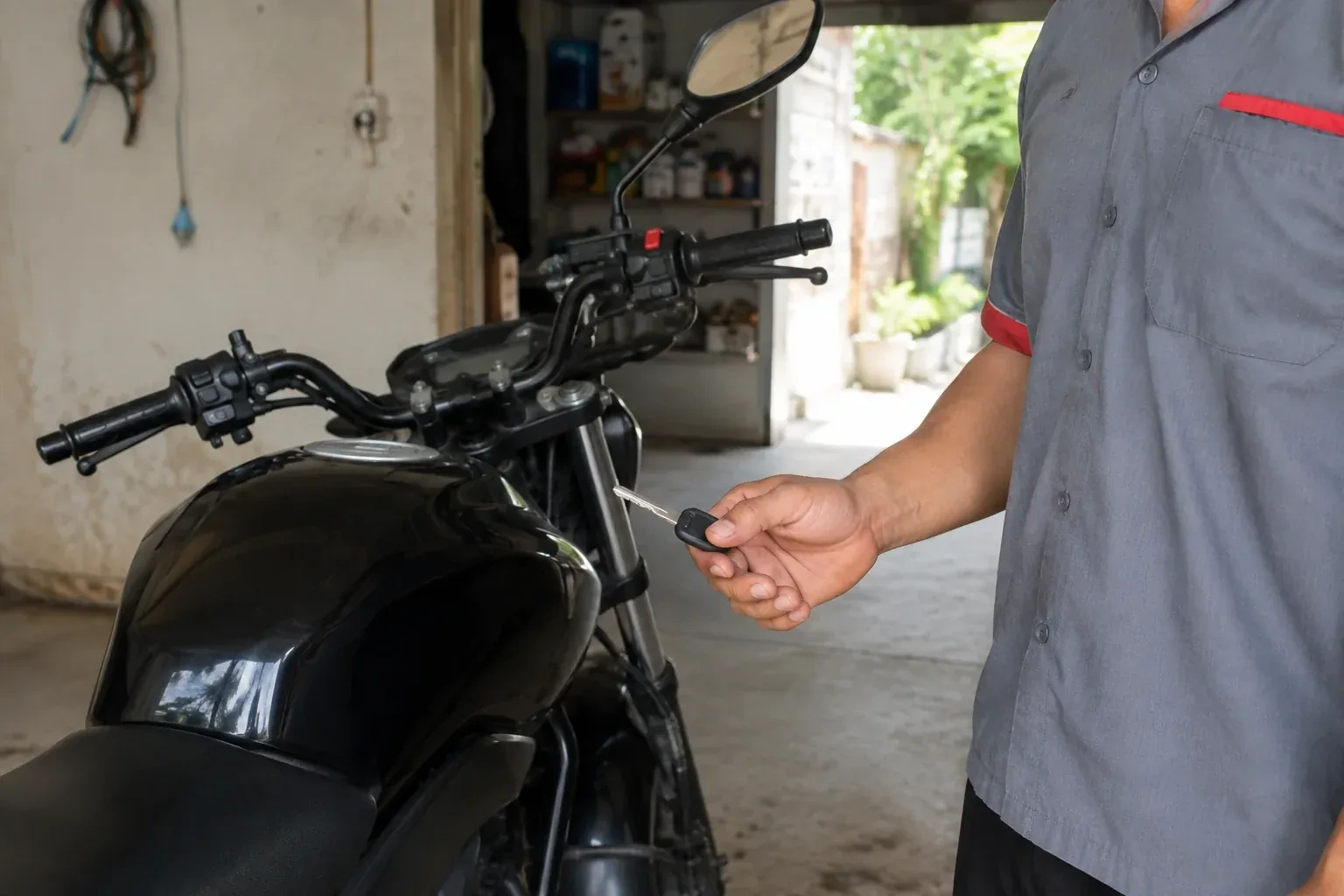
A machine bought without a full history often arrives with one worn key and no idea what, if anything, opens the seat or the fuel cap. Key service in that situation starts by identifying every lock on the machine and testing whichever key came with it against each one, then decoding or cutting whatever the existing key does not already cover. The result is a full, known set of keys for the machine rather than a single blade of uncertain origin.
How the visit goesA copy cut at a hardware kiosk turns the ignition on some mornings and skips it on others, occasionally sticking halfway and needing a wiggle that the original key never required.
Guelph
How the visit goes
Confirming who is asking
Before any lock is touched, the locksmith confirms that the person requesting a key has a real connection to the machine: vehicle registration, an insurance document that matches the plate, or a bill of sale for a recent purchase all work. Where paperwork is not on hand, a dealership record, a family member who can vouch for the owner, or a photo of the machine alongside identification often fills the gap. This step takes only a few minutes and stands ahead of any cutting, decoding or programming, since a working key is something that should only ever go to the person meant to hold one.
Decoding a lock with no key at all
Without any key to copy, the lock has to speak for itself. The locksmith picks the cylinder and reads each wafer's resting depth with feeler tools or a small scope, or uses a decoder built for that keyway, translating what is found into a cutting code. A key is then cut to that code and tested in the lock before being trusted on the ignition proper. This route takes longer than copying an existing key, since every wafer has to be read individually, but it produces a key that matches the lock exactly rather than an approximation.
A record worth keeping
A short written note of what was done, whether the lock was cut from an existing key, decoded from scratch, or paired as a new transponder, is worth keeping with the machine's other paperwork. It answers a question that often comes up later: whether a particular key is original or a replacement, and whether other locks on the bike were brought onto the same cut. For a machine that changes hands again down the road, that note saves the next owner from starting the same process from a single worn key and no history.
Motorcycle & Scooter Keys
In the van
- Replacement ignition or steering lock
- Torx and security bits
- Contact cleaner
- Wafer lock decoder
- Fob shells and batteries
What affects the quote
Same fees day, night or weekend
1Condition of the steering lock
A steering lock that turns freely adds little to the visit. One that has seized from weather or disuse needs patient freeing before any key can be tested against it, which takes extra time.
2Bringing multiple locks onto one key
Bringing the seat, fuel cap or a storage lock onto the ignition's key is extra work per lock rekeyed, separate from cutting the key itself, and is priced as its own line.
3Whether an immobiliser is fitted
A machine with an immobiliser needs its electronics paired as well as its lock cut, which adds equipment and testing beyond a purely mechanical key, and is reflected as its own step in the quote.
Motorcycle & Scooter Keys: questions
What should I have ready before you arrive?
The make, model and year if known, the VIN if it is accessible, which locks are involved, and whether the engine cranks but does not start, which can point toward an immobiliser issue among other ordinary starting-system causes. Mentioning whether any key at all still exists, even a broken or poorly cutting one, changes what equipment comes along, since working from a key is a different job than decoding a lock with nothing to reference.
What should I do to look after a new key or lock afterward?
Very little beyond two simple habits: wipe the key clean before use, especially after a wet ride, and, where the lock's own maker calls for it, a light dose of the specified lubricant once or twice a year. Storing a spare somewhere other than on the machine itself rounds out the care a new key or lock generally needs.
Can you cut a key for an older or vintage motorcycle?
Yes, provided the lock or an existing key survives to read from. Older mechanical locks are generally simpler than current wafer or transponder systems, and a locksmith familiar with vintage keyways can often decode or duplicate them the same way as a newer lock. Where a replacement lock is genuinely needed rather than a key, sourcing period-correct hardware can take longer than the key work itself.
Car Keys
- Car Key ReplacementThe fob went through the washing machine in a jacket pocket.
- Spare Car Key DuplicationA teenager just passed a driving test and reasonably wants a key of their own rather than…
- Key Fob ProgrammingEvery fob for the car disappeared at once inside a bag that was never recovered, and the vehicle…
Motorcycle & Scooter Keys near you
Choose a service to see how it works in Guelph. Each page explains the situation it suits, what the locksmith looks at first, how the job is done, and how to look after the hardware afterwards. If your problem sits between two services, either page will get you to the right conversation.